


Introduction
Growing a business is an exciting phase for any entrepreneur. However, scaling too quickly or without proper planning can lead to serious problems. Many businesses fail not because they lack demand, but because they make avoidable mistakes during the scaling process. Understanding the most common business scaling mistakes to avoid can save time, money, and resources.
In today’s competitive market, scaling is not just about increasing revenue or expanding operations. It requires strategic thinking, efficient systems, and a clear understanding of your business model. Beginners and even experienced entrepreneurs often rush into growth without building a strong foundation. As a result, they face issues like cash flow problems, operational inefficiencies, and team mismanagement.
This article will guide you through the most critical business scaling mistakes to avoid. You will also learn practical steps, benefits, risks, and expert tips to help you scale your business the right way. By the end, you will have a clear roadmap to grow sustainably and confidently.
What is Business Scaling Mistakes to Avoid?
Business scaling mistakes to avoid refer to the common errors entrepreneurs make when trying to grow their businesses rapidly. Scaling means increasing your business capacity to handle more customers, revenue, and operations without compromising performance.
However, mistakes happen when businesses expand without proper planning or resources. For example, hiring too quickly, overspending, or ignoring customer experience are all common scaling errors. These mistakes can slow down growth or even cause business failure.
Understanding business scaling mistakes to avoid helps entrepreneurs make smarter decisions. Instead of reacting to growth, they can prepare for it in advance. This ensures that expansion is smooth, controlled, and profitable.
Why is Business Scaling Mistakes to Avoid Important?
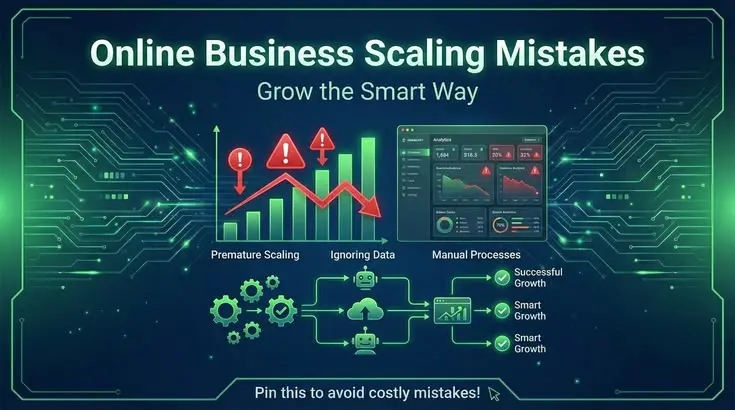
Avoiding scaling mistakes is crucial for long-term success. Many startups experience early growth but fail to sustain it because they ignore key fundamentals.
Here are a few reasons why understanding business scaling mistakes to avoid is important:
First, it protects your financial stability. Rapid scaling without cash flow management can lead to debt and losses.
Second, it improves operational efficiency. When systems are not ready, growth creates chaos instead of progress.
Third, it maintains customer satisfaction. Poor service during expansion can damage your brand reputation.
Finally, it ensures sustainable growth. Scaling should be steady and strategic, not rushed or uncontrolled.
Detailed Step-by-Step Guide
Step 1: Build a Strong Foundation
Before scaling, ensure your business model is stable. Your product or service should have consistent demand and proven profitability.
Focus on:
- Clear value proposition
- Stable revenue streams
- Defined target audience
Without a solid base, scaling will only magnify existing problems.
Step 2: Understand Your Financial Position
One of the biggest business scaling mistakes to avoid is ignoring finances. You must know your cash flow, expenses, and profit margins.
Track:
- Monthly revenue
- Operating costs
- Break-even point
Scaling requires investment, so financial clarity is essential.
Step 3: Create Scalable Systems
Manual processes work in small businesses but fail during growth. Automate and streamline operations to handle increased demand.
Examples include:
- Customer management systems
- Inventory tracking tools
- Automated marketing platforms
Efficient systems reduce errors and save time.
Step 4: Hire the Right Team
Hiring too fast or choosing the wrong people is a common mistake. Build a team that supports growth, not slows it down.
Focus on:
- Skilled professionals
- Clear roles and responsibilities
- Strong leadership
A good team ensures smooth scaling.
Step 5: Focus on Customer Experience
Never compromise on customer satisfaction. Many businesses lose customers during expansion due to poor service.
Maintain:
- Fast response times
- Consistent product quality
- Strong customer support
Happy customers drive sustainable growth.
Step 6: Test Before Expanding
Avoid jumping into new markets or products without testing. Start small and analyze results before scaling further.
Use:
- Pilot programs
- Market research
- Customer feedback
Testing reduces risk and improves decision-making.
Step 7: Monitor Performance Regularly
Scaling is not a one-time process. Continuously track your performance and adjust strategies as needed.
Key metrics include:
- Revenue growth
- Customer retention
- Operational efficiency
Regular monitoring helps you avoid major mistakes.
Benefits of Business Scaling Mistakes to Avoid
- Prevents financial losses and overspending
- Improves decision-making and planning
- Enhances operational efficiency
- Maintains customer satisfaction
- Supports sustainable business growth
- Reduces risk of business failure
- Builds a strong and scalable structure
Disadvantages / Risks
- Slower growth if over-cautious
- Increased planning time and effort
- Initial investment in systems and tools
- Possible missed opportunities due to careful approach
Common Mistakes to Avoid
One of the most common business scaling mistakes to avoid is scaling too quickly. Rapid growth may seem attractive, but it often leads to operational issues and financial strain.
Another mistake is ignoring cash flow management. Many businesses focus on revenue but forget about expenses, leading to serious financial problems.
Hiring without a clear strategy is also risky. Bringing in too many employees without proper roles can create confusion and inefficiency.
Neglecting customer experience is another critical error. Growth should never come at the cost of customer satisfaction.
Lack of proper systems is a major issue. Without automation and structure, operations become chaotic during scaling.
Finally, failing to adapt is a mistake. Businesses must evolve with market changes to stay competitive.
FAQs
1. What are business scaling mistakes?
Business scaling mistakes are errors made during the growth phase of a business, such as poor planning, overspending, and weak systems.
2. Why do businesses fail when scaling?
Businesses fail because they grow too fast without proper resources, systems, or financial planning.
3. How can I scale my business safely?
You can scale safely by building strong systems, managing finances, hiring carefully, and testing strategies before expanding.
4. Is scaling the same as growth?
No, growth increases revenue, while scaling focuses on increasing capacity without significantly increasing costs.
5. What is the biggest scaling mistake?
The biggest business scaling mistake to avoid is expanding too quickly without a solid foundation.
6. How important is customer experience during scaling?
Customer experience is extremely important. Poor service during scaling can damage your reputation and reduce long-term success.
Expert Tips & Bonus Points
Always plan ahead before making any major decision. Scaling should be strategic, not emotional.
Invest in technology early. Automation tools can save time and improve efficiency during growth.
Focus on data-driven decisions. Use analytics to guide your strategies instead of guessing.
Build a strong company culture. A motivated team performs better during rapid changes.
Stay flexible and open to change. Markets evolve, and your business should adapt accordingly.
Avoid comparing your growth with others. Every business has a unique journey and pace.
Conclusion
Scaling a business is a major milestone, but it comes with challenges. Many entrepreneurs make critical errors simply because they lack proper guidance. Understanding the most important business scaling mistakes to avoid can help you navigate this phase successfully.
Instead of rushing into expansion, focus on building a strong foundation. Pay attention to your finances, systems, and team. These elements play a key role in ensuring smooth growth. Additionally, always prioritize customer satisfaction, as it directly impacts your long-term success.
Scaling is not about growing fast; it is about growing smart. Take calculated steps, test your strategies, and monitor your progress regularly. By avoiding common mistakes, you can create a sustainable and profitable business.
In the end, success in scaling comes down to preparation, patience, and smart decision-making. If you follow the right approach, you can expand your business confidently while minimizing risks and maximizing opportunities.
